
Mountain bikers have debated Shimano Saint vs XTR brakes for years. Both are powerful four-piston hydraulic disc brakes, but they’re designed for different types of riding. If you’re building a downhill bike, enduro machine, or aggressive trail bike, choosing the right brake can make a huge difference in confidence and control.
So which brake should you buy in 2026?
For most downhill and bike park riders, the Shimano Saint still comes out on top. For riders who want lower weight and better all-round versatility, the Shimano XTR is the better option.
Shimano Saint vs XTR Quick Comparison
| Feature | Shimano Saint | Shimano XTR |
|---|---|---|
| Best For | Downhill & Bike Park | Trail, Enduro & XC |
| Stopping Power | Excellent | Excellent |
| Weight | Heavier | Lighter |
| Heat Management | Excellent | Very Good |
| Modulation | Excellent | Excellent |
| Durability | Excellent | Very Good |
| Value For Money | Excellent | Good |
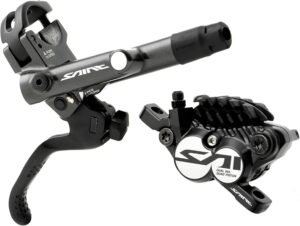
Shimano Saint Overview
The Shimano Saint has been one of the most trusted downhill brakes in mountain biking for over a decade.
Designed specifically for gravity riding, Saint brakes deliver massive stopping power and consistent performance on long, steep descents. They’re built to handle bike park laps, downhill racing, and heavy riders without fading under pressure.
Pros
Huge stopping power
Proven downhill race performance
Excellent heat management
Reliable in wet and muddy conditions
Easy maintenance
Cons
Heavier than XTR
Bulkier lever design
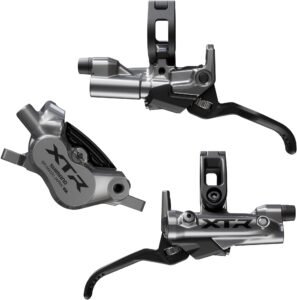
Shimano XTR Overview
Shimano XTR is Shimano’s flagship performance brake range.
The four-piston XTR brake delivers impressive power while keeping weight low. It’s a favourite among aggressive trail riders, enduro racers, and riders who want top-level performance without the extra weight of a downhill-specific brake.
Pros
Lightweight design
Powerful braking performance
Excellent modulation
Premium finish and materials
Great for trail and enduro riding
Cons
More expensive
Not quite as downhill-focused as Saint
Stopping Power
When it comes to outright braking force, the Saint still has a slight advantage.
The difference isn’t huge, but downhill riders often prefer the more aggressive feel and extra confidence the Saint provides on steep terrain.
Winner: Shimano Saint
Weight
This is where XTR shines.
The lighter lever and caliper design make XTR a better choice for riders who spend long days climbing and pedalling.
Winner: Shimano XTR
Bike Park Riding
For bike parks and uplift days, Saint remains one of the best brakes available.
The extra weight is barely noticeable once gravity takes over, while the additional confidence can be worth every gram.
Winner: Shimano Saint
Enduro Riding
Both brakes perform brilliantly for enduro racing.
If your riding includes big climbs as well as technical descents, XTR often makes more sense.
Winner: Shimano XTR
Which Brake Would We Choose?
Choose Shimano Saint If:
You ride downhill regularly
You spend time at bike parks
Maximum stopping power matters most
Weight isn’t a major concern
Choose Shimano XTR If:
You ride trail and enduro
You want a lighter setup
You climb as much as you descend
You want Shimano’s premium race brake
Verdict
The Shimano Saint remains the better brake for downhill riders, bike park riders, and anyone prioritising maximum braking power and durability.
The Shimano XTR is the better all-round choice for trail and enduro riders who want powerful braking performance in a lighter package.
For pure gravity riding, Saint still takes the win. For versatility, XTR comes out ahead.
Explore more Gear

Looking for more MTB gear recommendations? Check out our most popular guides below.